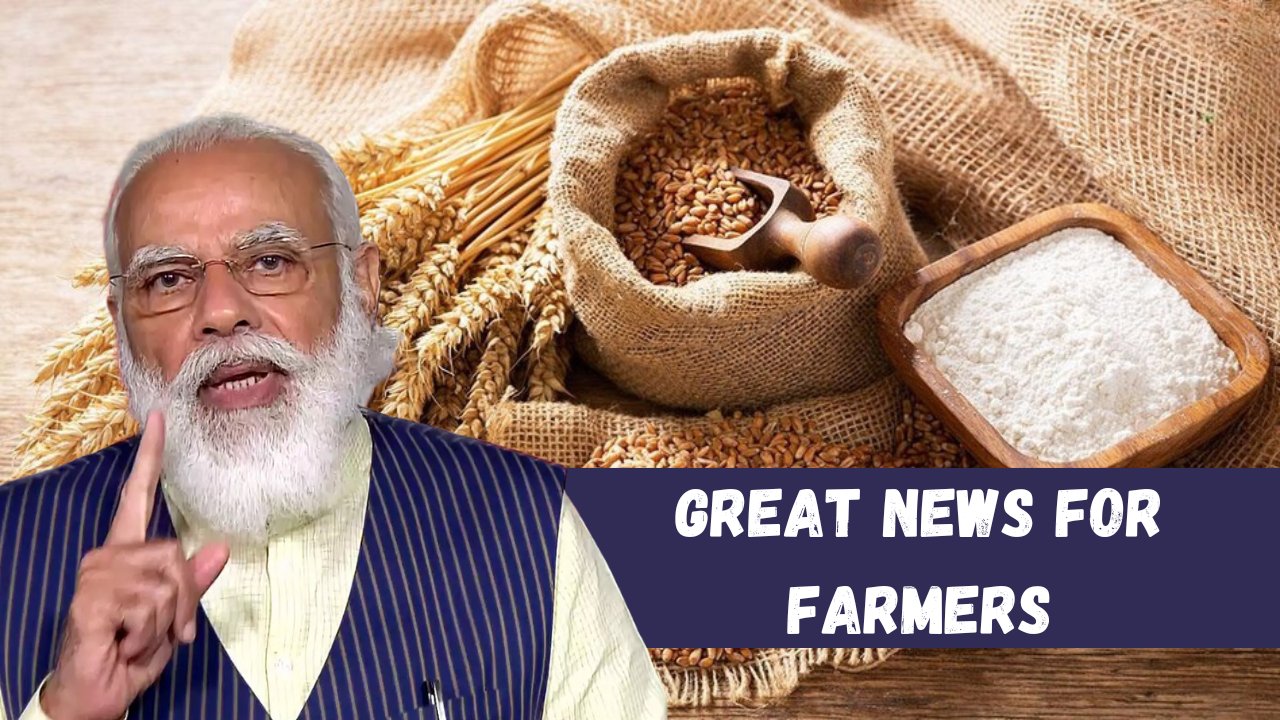
Big Win for Farmers : In a significant development that brings both relief and concern to the agricultural sector, the latest government data reveals a mixed trend in the prices of major food grains. While two staple grains have seen a noticeable rise in prices, a major respite comes with the reduction in costs for five essential grains. This price adjustment is expected to offer considerable relief to farmers, boost procurement, and influence upcoming policy decisions in the agricultural space.
Let’s explore the full scope of these changes, understand the implications for farmers and consumers, and analyze what lies ahead for the grain economy.

Big Win for Farmers : Understanding the Price Movement: Context Behind the Shift
Grain prices in India are subject to various factors—monsoon variability, global supply chain dynamics, and domestic policy changes. The current revision comes amid efforts to stabilize food inflation and support farmers ahead of the upcoming sowing season.

According to the recent price release by the Ministry of Agriculture and Farmers’ Welfare, there is a strategic revision in the Minimum Support Price (MSP) for select crops. While two grains have witnessed a spike in prices, five key crops have been slashed in a move seen as pro-farmer and pro-consumer.

2 Grains See Price Hike : What’s Getting Costlier?
Despite the overall relief, farmers and consumers will notice a rise in the MSP of two grains. The government cites rising input costs and demand patterns as the reason for the hike.
Grains With Increased MSP:
- Wheat – An essential rabi crop with high domestic demand
- Barley – Used for fodder, food, and brewing industries
These hikes are intended to compensate farmers for the increased cost of fertilizers, fuel, and irrigation.
Revised MSP Table: Grains with Increased Prices
| Crop | Previous MSP (₹/quintal) | Revised MSP (₹/quintal) | Increase (₹) | Percentage Increase |
|---|---|---|---|---|
| Wheat | 2,125 | 2,275 | 150 | 7.05% |
| Barley | 1,635 | 1,785 | 150 | 9.18% |
Relief for Farmers: 5 Grains Get Cheaper
In a surprising but welcome move, the government has slashed MSP for five key grains. This decision is aimed at easing procurement for food security programs and reducing market surplus.
Grains With Reduced MSP:
- Paddy (Common)
- Maize
- Jowar
- Bajra
- Ragi
This could potentially lead to better government procurement, lower foodgrain prices in the open market, and reduced storage costs.
See More : How Long Does an Electric Scooter Battery Really Last
Revised MSP Table: Grains with Reduced Prices
| Crop | Previous MSP (₹/quintal) | Revised MSP (₹/quintal) | Decrease (₹) | Percentage Decrease |
|---|---|---|---|---|
| Paddy | 2,040 | 2,010 | -30 | -1.47% |
| Maize | 1,962 | 1,910 | -52 | -2.65% |
| Jowar | 2,970 | 2,900 | -70 | -2.36% |
| Bajra | 2,500 | 2,420 | -80 | -3.20% |
| Ragi | 3,578 | 3,490 | -88 | -2.46% |
Why This Matters: Implications for Farmers and the Economy
This price revision is not just about numbers—it has far-reaching consequences for India’s agricultural economy. Here’s how it impacts different stakeholders:

For Farmers:
- Better returns on wheat and barley production
- Potential shift in sowing preferences toward higher-MSP crops
- Reduced income from paddy, maize, and millets may affect planning
For Consumers:
- Likely moderation in food prices for grains with lowered MSP
- Improved availability of subsidized grains through PDS
For the Government:
- Better control over food inflation
- Reduced burden on FCI storage and procurement
- Encouragement for crop diversification
Expert Opinions: What Do Analysts Say?
Agricultural economists and policy experts are divided on the mixed price strategy. While many applaud the government’s attempt to strike a balance, some raise concerns about its timing and long-term sustainability.
Key Takeaways from Experts:
- “This is a bold move ahead of elections. The price drop in certain grains could control retail inflation.” – Dr. Ashok Gulati
- “Farmers growing millets and maize may feel short-changed. Government needs to support them through additional subsidies or schemes.” – Prof. Ramesh Chand
- “This sends a mixed signal to the market, but could realign cropping patterns in the long term.” – Kaveri Singh, Agri Market Analyst
Regional Impact: Who Benefits the Most?
Different states in India have different cropping patterns, and the impact of MSP changes will vary accordingly.
States Likely to Benefit from MSP Increase (Wheat & Barley):
- Punjab
- Haryana
- Madhya Pradesh
- Rajasthan
States Affected by Reduced MSP (Paddy, Maize, Millets):
- Odisha
- Chhattisgarh
- Bihar
- Karnataka
- Tamil Nadu
What Should Farmers Do Now?
In light of these changes, farmers need to reassess their sowing plans. The government is also expected to release new crop insurance and subsidy schemes to offset losses from price reduction.
Tips for Farmers:
- Monitor local mandi prices closely
- Explore government schemes and subsidies
- Shift to higher-MSP crops where feasible
- Leverage technology and agri-advisory apps
A Step Toward Balanced Agri-Economy?
While the dual pricing policy might seem contradictory at first glance, it reflects the government’s tightrope walk between farmer welfare and inflation control. As the Rabi season approaches, the impact of this price shift will become more evident across supply chains and mandis