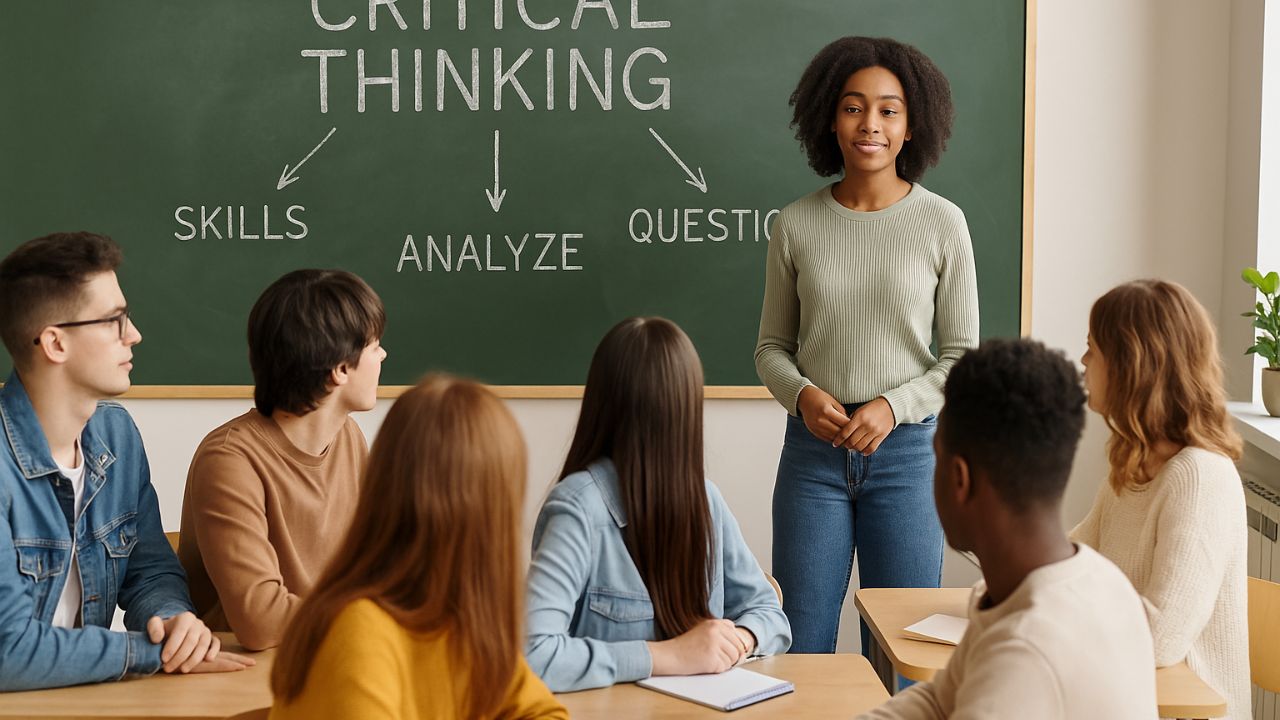
Critical Thinking Skills – The Institute of Epistemics http://instituteofepistemics.org/ stands at the forefront of global academic thought, focusing on the nature, structure, and evolution of human understanding. With an interdisciplinary approach that bridges philosophy, education, cognitive science, and technology, the institute is committed to fostering intellectual growth in learners of all ages. Its programs are designed to challenge conventional learning boundaries and provide tools for deeper inquiry. In today’s knowledge-driven world, where information is abundant but understanding is rare, the Institute plays a crucial role in nurturing critical thinking skills. By combining classical epistemological frameworks with modern educational strategies, it empowers learners to navigate complex problems, question assumptions, and make well-reasoned decisions in both academic and real-world contexts.
Why Critical Thinking Matters in the 21st Century
In an age marked by rapid technological change, misinformation, and complex societal challenges, critical thinking has emerged as one of the most vital skills for modern learners. Unlike rote memorization or passive absorption of facts, critical thinking equips individuals with the ability to analyze, evaluate, and synthesize information effectively. It fosters intellectual curiosity and helps students approach problems with a structured mindset. According to the World Economic Forum, critical thinking consistently ranks among the top skills needed for future jobs. Students who can think critically are better prepared to assess online content, participate in civic discourse, and contribute meaningfully in the workplace. Schools and institutions must now prioritize this skill, embedding it in curriculum design, pedagogy, and classroom culture.

Strategies to Foster Critical Thinking in Classrooms
Educators can unlock critical thinking in students by integrating active learning strategies into daily instruction. One effective approach is the Socratic method—posing open-ended questions that encourage dialogue and reflection. Another is project-based learning, where students solve real-life problems collaboratively, applying analytical reasoning along the way. Teachers can also use case studies, debates, and critical reading exercises to challenge assumptions and promote deeper understanding. Digital tools like simulation games and mind-mapping software further support this goal by encouraging learners to visualize relationships and explore multiple perspectives. Institutions such as the Institute of Epistemics lead by example, designing programs that blend these techniques with epistemic theory to cultivate habits of inquiry and reasoned judgment.

Overcoming Barriers to Critical Thinking Development
Despite its importance, several obstacles hinder the cultivation of critical thinking in educational settings. Standardized testing, rigid curricula, and teacher-centered models often discourage analytical exploration. Many students arrive at college without exposure to open-ended inquiry or reflective discussion, making it difficult to adapt to critical frameworks. Furthermore, cultural factors, peer pressure, and fear of being wrong can suppress intellectual risk-taking. To counter these challenges, schools must create psychologically safe environments where questioning is encouraged and mistakes are seen as learning opportunities. Teacher training programs should emphasize metacognitive skills and flexible teaching methods that support inquiry-based learning. When these barriers are addressed, students become more confident thinkers and active participants in their own education.

Connecting Critical Thinking With Real-World Impact
Critical thinking does not end in the classroom—it extends into every domain of life. Whether making career decisions, voting in elections, or engaging with digital media, individuals rely on their ability to assess evidence, weigh arguments, and anticipate consequences. Employers increasingly seek graduates who can solve problems creatively and collaborate across disciplines. In civic life, critical thinkers are more likely to challenge propaganda, advocate for social justice, and participate in meaningful change. Institutions like the Institute of Epistemics recognize this broader role, designing outreach programs that bring epistemic training into communities and workplaces. By linking academic skills to societal outcomes, educators ensure that critical thinking becomes a lifelong asset, not just an academic exercise.