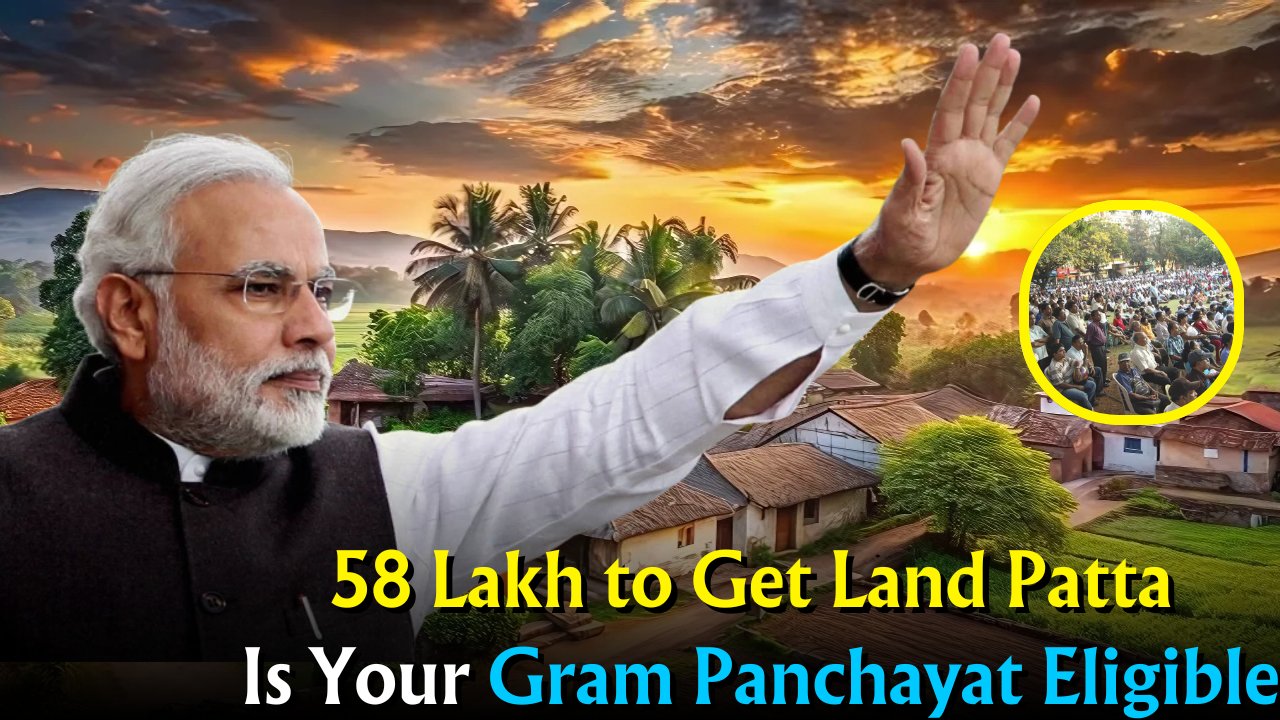
Gram Panchayat : The government has taken a monumental decision that could change the lives of millions living in rural India. A historic land regularization drive is set to provide land ownership documents—commonly known as “land patta”—to over 58 lakh people across various Gram Panchayats. This bold initiative not only promises security and dignity to landholders but also opens doors to better credit access, housing schemes, and social welfare benefits.
This article will guide you through everything you need to know about this initiative—who qualifies, how to apply, what documents are required, and why this move matters. If you live in a village and don’t have legal proof of your land, this might be your chance to finally own what you’ve lived on for generations.

What is a Land Patta and Why is It Important?
A “land patta” is an official land ownership document issued by the government. It establishes legal possession and can be used for various purposes like applying for bank loans, housing schemes, and even selling or transferring land.

Benefits of Having a Land Patta:

- Legal proof of land ownership
- Eligibility for government welfare schemes
- Access to housing benefits (PMAY, etc.)
- Ability to apply for bank loans
- Protection from eviction or disputes
- Empowerment and dignity for rural families
Key Highlights of the Government’s Land Patta Distribution Initiative
This new initiative marks one of the largest land ownership regularization drives in Indian history, targeting rural populations who have been living on unregistered land for decades.
Major Highlights:
- Targeted Beneficiaries: 58 lakh rural residents across various states
- Executing Authority: State Revenue Departments in coordination with Gram Panchayats
- Purpose: Legalizing unauthorized or informal land occupancy
- Support Provided: Application assistance, awareness drives, and grievance redressal at the Panchayat level
See more: Historic Government Move
States with Major Beneficiary Numbers
| State | Estimated Beneficiaries | Focus Areas | Implementation Mode |
|---|---|---|---|
| Uttar Pradesh | 12 lakh | Rural hamlets, Dalit colonies | Through Gram Sabhas |
| Madhya Pradesh | 9 lakh | Forest fringe areas | Digital land records |
| Bihar | 7 lakh | Gair Majurwa lands | Community verification |
| Odisha | 6 lakh | Coastal and tribal zones | Land Settlement Courts |
| Tamil Nadu | 5 lakh | Temple land areas | Mobile land camps |
| Andhra Pradesh | 6 lakh | Assigned lands | Village Secretariat Model |
| West Bengal | 4 lakh | Char (riverine) lands | Door-to-door survey |
Who is Eligible for the Land Patta Scheme?
Not everyone qualifies for this scheme, but if you fall into any of the following categories, you may be eligible:
Eligibility Criteria:
- Must be residing on the land for at least 10 years or more
- The land must be government-owned, not private or disputed
- Applicant must belong to economically weaker sections (EWS), SC/ST, or other marginalized groups
- Should not already own a registered land or property
- Must be a permanent resident of the village where the land is located
Important Note: Proof of continuous occupation, verification by Panchayat officials, and community validation are often required.
How to Apply for Your Land Patta?
The application process is designed to be simple, especially for rural citizens. Here is a step-by-step breakdown of how to apply for the land patta:
Step-by-Step Application Process:
- Visit your local Gram Panchayat office or attend the government-organized land camps.
- Collect and fill the application form provided by the authorities.
- Attach the required documents (see the next section for details).
- Submit the application to the Gram Panchayat Secretary or Revenue Officer.
- Verification process will be conducted by local officials.
- Approval and issuance of land patta if all criteria are met.
Documents Required for Application
| Document Name | Purpose |
|---|---|
| Aadhaar Card | Identity verification |
| Ration Card | Proof of residence |
| Affidavit of land possession | Declaration of occupation |
| Panchayat Recommendation | Local support and verification |
| Photograph of occupied land | Visual evidence of residence |
| Voter ID or any govt. ID | Citizenship proof |
| Proof of land use (if any) | Agricultural or residential proof |
What Happens After You Receive Your Land Patta?
Once your application is approved, the land patta will be issued in your name. Here’s what follows:

Post-Approval Benefits:
- Your land is now officially recognized by the government.
- You can build a house under PMAY or apply for a home loan.
- Banks and financial institutions can give you credit using land as collateral.
- You are protected from forced eviction or encroachment claims.
- Inheritance and land transfer become legally valid and easier.
Timeline and Implementation Phases
The land patta distribution is happening in multiple phases over the next 12-18 months. Here’s a general idea of the roadmap:
| Phase | Time Period | Activities |
|---|---|---|
| Phase 1 | April – June | Awareness campaigns, data collection |
| Phase 2 | July – October | Application and verification drive |
| Phase 3 | Nov – Feb | Document processing and patta issue |
| Phase 4 | March – April | Appeals, corrections, final review |
Frequently Asked Questions (FAQs)
Q1: Can women be the primary owner of the land patta?
Yes. In fact, many state governments encourage joint or female ownership to promote women empowerment.
Q2: What if my application is rejected?
You can appeal through the Gram Sabha or at the District Revenue Office. Correction windows will also be provided.
Q3: Is there any fee for the land patta?
Most states are offering it free of cost under rural welfare schemes. However, minimal stamp duty may apply in some cases.
Q4: What if my land is in a disputed area?
Only undisputed government land is eligible. Disputed or court-bound land will not qualify unless resolved.
Q5: Can I sell the land after getting the patta?
Yes, but usually after a lock-in period of 5 years in most states, especially if the land is allotted under welfare schemes.
Impact of the Land Patta Scheme on Rural India
This land patta initiative is not just about paperwork—it’s about transformation. It signifies a shift toward empowering rural families by giving them the foundation of economic and social security. With millions of people finally getting legal rights over their homes and farms, the long-standing issue of “insecure tenancy” is being addressed at scale.
Expected Benefits:
- Increase in rural household income
- Better access to government schemes and subsidies
- Reduction in land disputes and conflicts
- Improved creditworthiness of rural families
- Boost to rural infrastructure development
This historic initiative by the government to distribute over 58 lakh land pattas is a life-changing opportunity for countless families across India’s Gram Panchayats. If you or someone in your village has been living on government land without ownership papers, now is the time to act. Check your eligibility, gather your documents, and visit your local Panchayat or land camp to apply.
Securing a land patta means securing your future—your home, your dignity, and your rightful place in the country’s progress story.

This article is meant for informational purposes only. The exact eligibility criteria, documents, and application process may vary slightly depending on the state or local administration. For the most accurate and updated information, please visit your local Panchayat office or the official state government land portal.