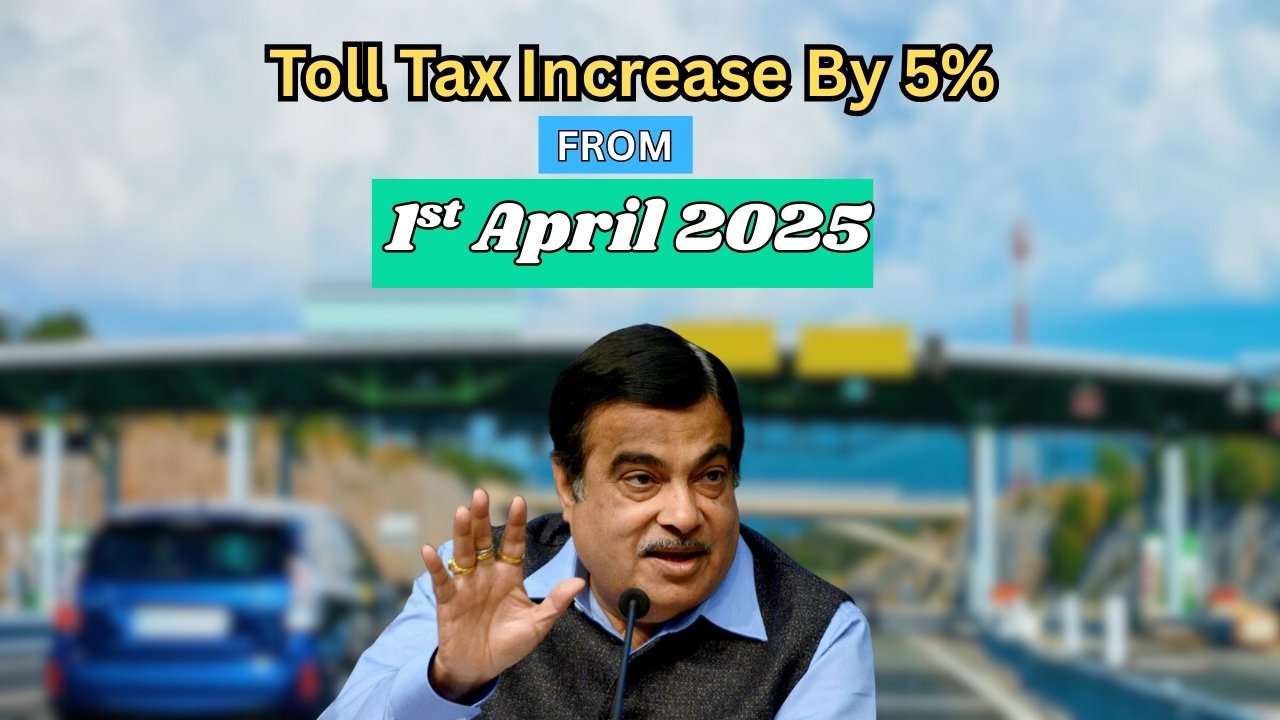
Toll Tax : With the financial year drawing to a close, Indian commuters are in for an unwelcome surprise. The National Highways Authority of India (NHAI) has officially announced a 5% hike in toll tax across the country, effective April 1, 2025. This annual revision is expected to impact daily commuters, transport operators, and businesses relying on road logistics. The toll hike is part of NHAI’s structured revenue model aimed at improving road infrastructure and maintenance across the national highway network.
Let’s break down what this means for you, how it will affect different categories of vehicles, and what you can expect on your next road trip or daily commute.

Why the Toll Tax is Being Increased
The annual toll revision is governed by a pre-set formula linked to the wholesale price index (WPI). The 5% hike is in line with the contractual agreement between NHAI and toll operators.

Key Reasons Behind the Hike:

- To fund ongoing and upcoming infrastructure projects
- To maintain existing roads and enhance service quality
- To accommodate inflation and rising maintenance costs
- To meet targets under the Bharatmala Pariyojana and other flagship schemes
According to NHAI officials, these annual hikes are necessary to ensure sustainable development of the rapidly expanding national highway network, which spans over 1.46 lakh kilometers.
Categories of Vehicles Affected and Revised Rates
The toll revision applies to all categories of vehicles – from private cars to commercial trucks. Here’s a breakdown of revised toll charges based on vehicle types and sample routes:
Sample Toll Charges After 5% Hike
| Vehicle Type | Previous Toll (₹) | New Toll (₹) | Example Route | Change (₹) | % Increase |
|---|---|---|---|---|---|
| Car/Jeep/Van | 100 | 105 | Delhi – Agra Expressway | 5 | 5% |
| Light Commercial | 160 | 168 | Mumbai – Pune Expressway | 8 | 5% |
| Bus/Truck | 330 | 347 | Bengaluru – Hyderabad | 17 | 5.15% |
| Heavy Vehicle (3-axle) | 520 | 546 | Jaipur – Delhi Highway | 26 | 5% |
| Oversized Vehicle | 800 | 840 | Lucknow – Kanpur | 40 | 5% |
| Two-Wheelers (if allowed) | 40 | 42 | Rural NH routes | 2 | 5% |
| Monthly Pass (Local) | 300 | 315 | For Residents/Local Users | 15 | 5% |
Impact on Logistics and Goods Transport
India’s logistics and transport sector, which heavily depends on road connectivity, will see a ripple effect from this toll hike. Transporters may pass on the additional toll cost to end consumers, thereby potentially increasing the cost of goods.
Key Concerns for the Industry:
- Increased freight charges for goods transported via highways
- Higher operational costs for fleet owners and logistics companies
- Possible delays in deliveries due to route re-evaluations
- Fuel prices combined with toll hikes may lead to inflation in retail prices
Industry experts are calling for better digital toll systems and discounts for frequent users to offset this cost burden.
Which Routes and Highways Are Most Affected?
While the hike is nationwide, expressways and high-traffic corridors are expected to see the sharpest increase in toll collection due to their high usage.
Top Toll-Heavy Routes Post-Hike
| Highway Name | Major Cities Connected | Average Toll Post-Hike (₹) | Vehicle Type | Traffic Volume |
|---|---|---|---|---|
| Delhi – Mumbai Expressway | Delhi, Jaipur, Kota, Vadodara | 650 | Car | High |
| Eastern Peripheral Expressway | Kundli, Ghaziabad, Palwal | 350 | Truck | High |
| Yamuna Expressway | Noida – Agra | 420 | Car | Medium-High |
| Bengaluru – Tumakuru NH | Bengaluru, Tumakuru | 280 | Truck | High |
| Mumbai – Pune Expressway | Mumbai, Pune | 320 | Car | High |
| Lucknow – Ghaziabad E-Way | Lucknow, Kanpur, Ghaziabad | 580 | Truck | Medium |
| Chennai – Bengaluru NH | Chennai, Vellore, Bengaluru | 600 | Truck | High |
Monthly Passes and Exemptions: What You Need to Know
NHAI offers monthly passes for local residents, daily commuters, and agricultural vehicles in select areas. However, the 5% hike will also reflect in these concession rates.
Who Can Avail Concessions:

- Local residents within 20 km radius of the toll plaza
- School buses, ambulances, and funeral vans
- Agricultural tractors and animal-drawn carts (in rural areas)
- Army and paramilitary vehicles
Revised Local Monthly Pass Charges:
- Private Car Pass: ₹315 (up from ₹300)
- Light Commercial Vehicle Pass: ₹520 (up from ₹495)
To avail a monthly pass, commuters need to submit valid identification, address proof, and vehicle documents to the respective toll operator or via the official NHAI FASTag portal.
FASTag Users: What Changes for You?
Since tolls on national highways are collected via FASTag, the new rates will be auto-debited based on revised rates. No manual intervention is needed, but users should ensure sufficient wallet balance to avoid penalties or delays.
FASTag Advisory:
- Keep FASTag wallet topped up to avoid penalty
- Check toll rates before traveling using the NHAI or FASTag app
- Frequent travelers can monitor expenses via FASTag statements
- Recharge options: UPI, net banking, mobile wallets
See more : Major Changes in Retirement Rules for Government Employees
Public Reactions and Policy Feedback
The announcement has triggered mixed reactions. While infrastructure development is welcomed, commuters and transporters are concerned about affordability.
Common Public Concerns:
- “Toll is increasing every year, but roads still have potholes.”
- “Why pay toll on roads that are under construction?”
- “We already pay fuel tax, road tax – why such frequent hikes?”
Policy experts argue that a transparent audit of toll usage, infrastructure status, and cost-to-benefit ratios should be publicly available to justify annual hikes.
Prepare, Plan, and Stay Informed
As India continues to upgrade its highway infrastructure, toll hikes will remain a part of the journey. While the 5% hike may seem marginal in isolation, its impact will be cumulative, especially for commercial operators and daily commuters.
Planning Tips:
- Recalculate travel budgets for April onward
- Consider alternate routes if feasible
- Recharge FASTag in advance
- Businesses should revise logistics estimates
For the most accurate and updated toll rates, visit the NHAI website or check through your FASTag provider. The road ahead may be costlier, but being informed will help you travel smarter.

Toll rates mentioned are indicative and may vary based on actual distance, location, and toll operator. Always refer to the official NHAI website or your FASTag provider for real-time toll charges.