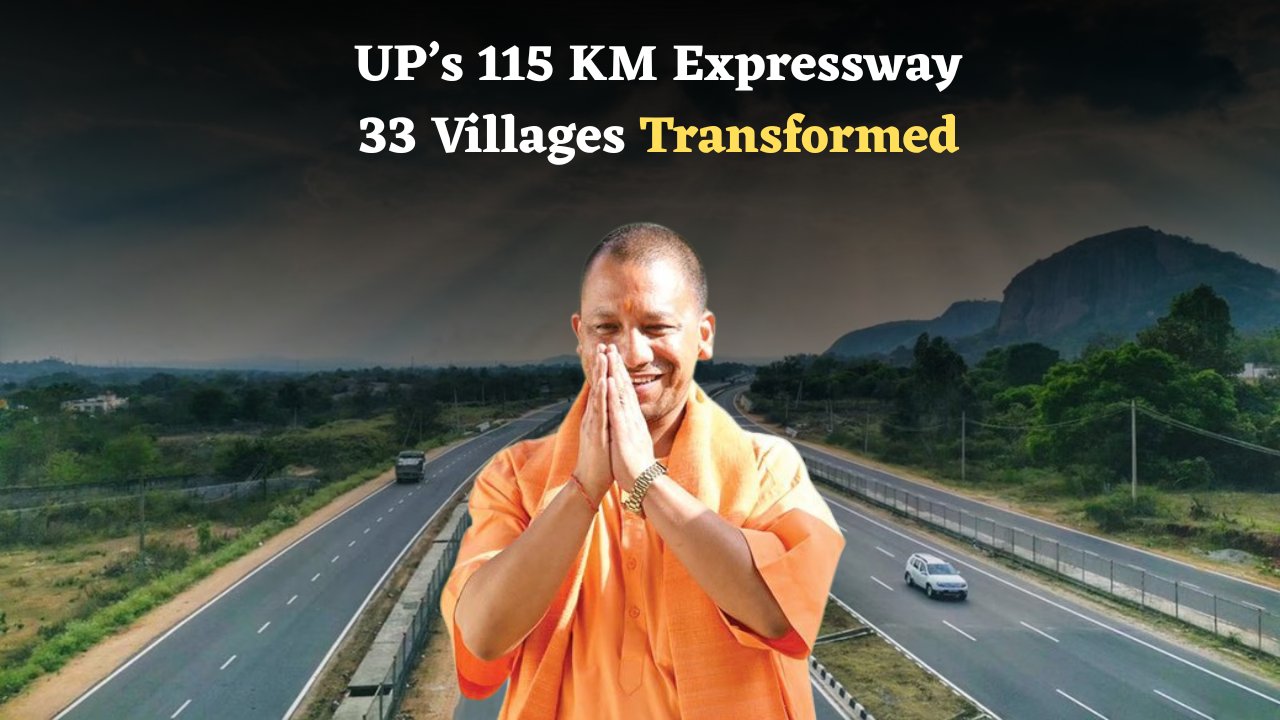
UP Expressway : Uttar Pradesh is on the verge of a historic transformation with the construction of a massive 115-kilometer expressway. This infrastructural marvel is not just a road — it’s a gateway to economic development, connectivity, and industrial expansion. The expressway will pass through 33 villages, paving the way for a mega industrial city that is set to redefine the region’s future.
Let’s explore how this ambitious project will change the landscape of rural Uttar Pradesh and place it firmly on the industrial map of India.

UP Expressway : What Is the 115 KM Expressway Project?
The 115 KM expressway is part of Uttar Pradesh’s broader infrastructure push aimed at boosting connectivity between key regions and facilitating smoother transport of goods and services. This expressway will act as a strategic corridor for industrial growth and regional development.

Key Highlights:

- Total length: 115 kilometers
- Projected to cost over ₹10,000 crore
- Will connect major cities and industrial hubs
- Targets 33 villages for development along the corridor
- Focuses on logistics, warehousing, and manufacturing
The expressway is a crucial piece of the state’s development puzzle, intended to complement existing expressways like the Yamuna and Purvanchal corridors.
The 33 Villages Set for Transformation
The expressway directly impacts 33 villages, which are poised for a complete transformation — from agrarian settlements to industrially driven economies. The state government is focusing on modernizing infrastructure, creating job opportunities, and ensuring skill development in these regions.
Villages Benefiting from the Project
| Village Name | District | Current Status | Planned Development | Distance from Expressway |
|---|---|---|---|---|
| Bhikampur | Aligarh | Agricultural | Warehousing, Logistics Hub | 1.2 km |
| Kheda Nibkaran | Bulandshahr | Semi-urban | Industrial Park | 0.9 km |
| Mahrawal | Aligarh | Rural | Manufacturing Unit Zone | 1.5 km |
| Dhanauli | Etah | Rural | Skill Development Center | 2.0 km |
| Bagras | Hathras | Agricultural | Logistics Park | 1.8 km |
| Kharanja Gulab | Kasganj | Undeveloped | Agro-based Industry | 2.1 km |
| Jalalpur | Aligarh | Rural | Textile Manufacturing Unit | 1.4 km |
| Kurawali | Mainpuri | Small Town | Electronics Cluster | 0.7 km |
These villages are being earmarked for industrial hubs, logistic corridors, agro-processing units, and small-scale manufacturing clusters.
See More : 10th Pass Women Can Now Earn ₹7000/Month
Features of the Mega Industrial City
The proposed industrial city will be one of the largest in northern India. Spread across thousands of hectares, the city will include state-of-the-art infrastructure, smart city features, and green energy initiatives.
Planned Features of the Industrial City:
- Multi-modal logistics parks
- Specialized zones for electronics, textiles, and agro-products
- Smart housing for workers and professionals
- Plug-and-play industrial units
- 24×7 power supply and robust water systems
- Skill development universities
- Green corridors and sustainable practices
Sector-Wise Investment Outlook
| Sector | Investment (INR) | Employment Potential | Special Features |
|---|---|---|---|
| Electronics | ₹2,000 Cr | 15,000+ jobs | E-waste management facilities |
| Agro-based Industries | ₹1,200 Cr | 10,000+ jobs | Cold storage & packaging units |
| Textiles | ₹900 Cr | 8,000+ jobs | Export-oriented production |
| Warehousing | ₹1,500 Cr | 6,000+ jobs | Smart tracking tech |
| Automobile Components | ₹800 Cr | 5,000+ jobs | Ancillary units for OEMs |
| IT & Services | ₹1,000 Cr | 12,000+ jobs | Co-working spaces, IT parks |
| Renewable Energy | ₹500 Cr | 3,000+ jobs | Solar, wind hybrid parks |
The city will not only generate employment but will also attract investment from national and global players.
Impact on Local Economy and Livelihoods
One of the most significant benefits of this project is the creation of local job opportunities and entrepreneurship possibilities. Villagers who were once solely dependent on agriculture will now have access to:
- Vocational training and upskilling programs
- Entry-level jobs in logistics, IT, and manufacturing
- Small business development opportunities
- Government-supported MSME schemes
- Access to markets and resources through better connectivity
This transition from a rural to a semi-urban economy will empower the youth and improve the quality of life for thousands of families.

Government Initiatives to Support the Project
To ensure seamless execution, the government has rolled out several supporting schemes and policies:
- Single Window Clearance: For faster approvals
- Land Acquisition Compensation: At 2x–4x market rates
- Incentives for Industries: Including tax holidays and subsidies
- Public-Private Partnerships: For infrastructure and services
- Eco-friendly Mandates: To maintain environmental standards
These proactive measures are designed to fast-track development while maintaining a sustainable approach.
How the Expressway Fits into UP’s Industrial Vision
The 115 KM expressway isn’t a standalone development—it’s a part of a grander vision for Uttar Pradesh’s industrial future. The state government’s “Uttar Pradesh Industrial Policy 2022” lays down a roadmap for turning the state into a $1 trillion economy.
How This Project Aligns:
- Links rural regions to economic corridors
- Reduces transportation time and logistics costs
- Encourages balanced regional development
- Supports the “Make in India” initiative
- Drives investments in Tier 2 and Tier 3 regions
This expressway will act as a vital economic artery, fueling the growth of industries not just along its route, but across the entire region.
What Residents and Experts Are Saying
The buzz around this expressway is not just political—it’s practical. Local residents, investors, and industry experts have voiced their optimism.
Resident Reactions:
- “My son will not have to migrate to cities now for work,” says a farmer from Dhanauli.
- “Earlier, our produce would rot before reaching markets. With better roads, we can sell on time,” shares a vegetable grower from Bagras.
Expert Views:
- “The expressway is a catalyst for balanced growth. It connects human potential with industrial demand,” says R.K. Singh, infrastructure expert.
- “Such developments reduce migration pressure on metros and create prosperity at home,” notes urban planner Sunita Jain.
These voices underscore the transformative potential of the project.
The 115 KM expressway in Uttar Pradesh is much more than a transport project—it’s a socio-economic revolution in motion. By connecting 33 villages to the mainstream economy and establishing a mega industrial city, the state is laying the groundwork for a prosperous future.
This development represents the future of India’s rural transformation — where roads don’t just carry vehicles, but dreams, jobs, and endless possibilities.

The project is in various stages of implementation and subject to changes as per policy decisions and feasibility studies. All statistics and projections are based on the latest public releases by relevant government authorities.